

Thank you for Subscribing to Retail Business Review Weekly Brief

Albertsons
Terry Singla, Vice President and General Manager of Ecommerce
Why Communication is Important in Ecommerce?
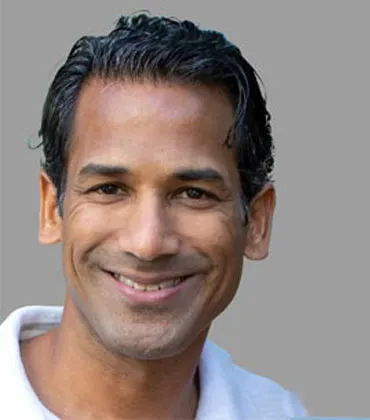
Terry Singla
Terry Singla is the Vice President and General Manager of Ecommerce at Albertsons, responsible for driving sales and profitability of its 1st party ecommerce business to achieve financial targets. Terry started his career in management consulting, with a specialization in corporate turnarounds and performance improvement. After leaving consulting, Terry held a variety of corporate roles leading teams across analytics, strategy, pricing and promotions, finance, and product management. He is a data-driven leader and team player, with an ability to translate complex information into actionable insights. Terry prides himself on being a change agent, skilled at leveraging analytics, process improvement, and technology to build and execute strategies across teams.
Could you provide an overview of your role and responsibilities within the company? I am the VP/GM of the Ecommerce business, responsible for driving the sales and profitability of our 1st party ecommerce business to achieve our financial targets. In my role, I work across functional teams to gain alignment on initiatives to drive our ecommerce business, and hold teams accountable to their KPI’s and financial goals. What are some of the key challenges you face? Grocery ecommerce has additional complexities that other ecommerce companies do not face. A few: 1. Customers have different preferences on certain items. For example, customers may want different cuts of meat or a certain ripeness of a banana. Thus, pickers need to make sure they are picking “like the customer”, in order to provide the customer confidence she will receive groceries that meet her preferences. 2. Substitutions – Since ecommerce grocery is typically picked inside a store, there are times where an item a customer ordered may not be available. Making sure a customer receives the products she ordered, or a great substitution is critical in providing the customer an excellent experience. 3. Customers use ecommerce grocery because it is simple and saves a lot of time. However, if a customer receives a subpar ecommerce experience which requires her to make a trip to the grocery store anyway, she will be hesitant to use online grocery in the future. Thus, it’s critical to provide customers an amazing ecommerce experience during every order. “In my role, I work across functional teams to gain alignment on initiatives to drive our ecommerce business, and hold teams accountable to their KPI’s and financial goals.” What would you say are some of the futuristic trends that will have an impact in the next 18-24 months There are many, but a few are as follows:● The ability to serve all customers ◦ Speed of service, including early morning and late-night orders ◦ White glove delivery – for customers living in high rises who do not want to come to the lobby to pick up groceries or customers who may need help bringing groceries inside their home, etc. ● Meal Planning / Inspiration – customers want to be inspired, and helping them with new recipes and an easy way to add the necessary ingredients to cart will make meal preparation easy and fun ● Automated grocery lists –Being able to extract grocery lists customers create (thru notes on phone, voice, handwritten lists, etc.), and add the specific items to their grocery cart based on previous purchase history will save customers time ● Marketplace – providing an “unlimited” assortment to customers, in order to drive a one-stop shop for all their grocery needs ● Personalization – continuing to create better relationships with customers ● Automation - robotic picking of groceries, autonomous delivery, etc. What advice would you give to young professionals who are interested in pursuing a similar career, and what qualities do you think are essential for success in this field? Advice that I often give young professionals typically centers around Continuous Learning, Ways of Working, and Mentorship: 1.Continuous Learning a. Foundational skills - I credit a lot of my success to the foundational skills I have. I started my career in analytics and finance, using data to understand where opportunities exist. I still use these skillsets daily. Determine how to use your strengths to differentiate yourself while you continue to focus on areas of opportunity to make you more well-rounded. b. Listening and Questioning - It’s easy to multitask in meetings when you aren’t actively participating. One of the things I made sure I did was to listen, and put myself in the shoes of the people asking or answering the questions. For instance, if my boss was answering a question with a business colleague, I’d think about how I would have answered the question, see if my boss and I answered it the same way, and if not, think about why she answered it a different way. This really helped me start to think like an executive. c. Communication – effective communication, especially around being able to translate data into business insights is critical. Thus, I like to use the following framework to drive alignment and business results: Data > Data Analysis > Insights > Story > Strategy > Implementation > Test & Learn > Iterate. Coming from an analytics background, it is important to be able to take complicated data and present it in a way that others can comprehend. Ultimately, if you are not able to get others to support you or your findings, then it does not matter how good your analysis is since it will never be acted upon. 2. Ways of Working a.Move fast, learn & iterate. Being a perfectionist is not a good quality to have in business. Learn how to check your numbers to assure they make sense, since moving fast is not an excuse for making poor decisions due to bad data. Oftentimes, knowing the business context will help you spot incorrect numbers quickly. This takes practice, but has been a valuable skill set I’ve learned over the years. b.Return on Time Spent (ROTS) – time is one of our most precious assets; thus, you need to balance time with size of opportunity. I have always used a ROTS calculation to size an opportunity quickly, which I define as revenue opportunity divided by people cost (person hours X $100/hour). For instance, if there is a $1M revenue opportunity, and it’s estimated to take 200 person hours to analyze, build and execute, then that’s a 50x return on time spent - $1M / (200 hrs * $100/hr). If you aren’t getting at least a 10x return, you are likely spending too much time on the initiative or working on the wrong initiative. c.Do not underestimate what it takes to execute. Companies are complex, oftentimes with many moving parts and decision makers. Thinking through end-to-end processes and making sure you bring the right constituents into the mix is critical. 3.Mentors a.Find mentors who you get along with and excel at skills you struggle with. Focus on those skills while continuing to utilize your strengths. b.I have both formal mentors and informal. Some of my mentors don’t even know they were my mentors, but I’d really study what they did well and try and practice those traits.
The articles from these contributors are based on their personal expertise and viewpoints, and do not necessarily reflect the opinions of their employers or affiliated organizations.
